50th Anniversary of the 1966 Wistar Symposium!
Mathematical Challenges to the Theory of Evolution
 AMP (Adenosine Monophosphate) - AMP is essential
for life on earth. It is used to make DNA, RNA, and other critical molecules.
It is manufactured by a 13 step process that requires 12 enzymes. During each
step one of the enzymes modifies an "intermediate" molecule into a different
"intermediate" until in the final step AMP is produced. Dr. Behe said, "The
precursor molecules - Intermediates III to XI - play no independent role;
they are used for nothing but to make AMP or GMP." He also said, "[M]etabolic
pathways where intermediates are not useful present severe challenges to a
Darwinian scheme of evolution." - Michael Behe, Darwin's Black Box,
2006, pp. 149-151
AMP (Adenosine Monophosphate) - AMP is essential
for life on earth. It is used to make DNA, RNA, and other critical molecules.
It is manufactured by a 13 step process that requires 12 enzymes. During each
step one of the enzymes modifies an "intermediate" molecule into a different
"intermediate" until in the final step AMP is produced. Dr. Behe said, "The
precursor molecules - Intermediates III to XI - play no independent role;
they are used for nothing but to make AMP or GMP." He also said, "[M]etabolic
pathways where intermediates are not useful present severe challenges to a
Darwinian scheme of evolution." - Michael Behe, Darwin's Black Box,
2006, pp. 149-151
 Appearance of Design Versus Actual Design -
In the cell you see the APPEARANCE of thinking, forethought, planning, and knowing.
Is this appearance illusory, or was there a designer behind the cell that was
capable of actual thinking, forethought, planning, and knowing?
Appearance of Design Versus Actual Design -
In the cell you see the APPEARANCE of thinking, forethought, planning, and knowing.
Is this appearance illusory, or was there a designer behind the cell that was
capable of actual thinking, forethought, planning, and knowing?
 Archaeopteryx -
This bird is dated to be tens of millions of years older than the dinosaurs it supposedly
evolved from.
Archaeopteryx -
This bird is dated to be tens of millions of years older than the dinosaurs it supposedly
evolved from. 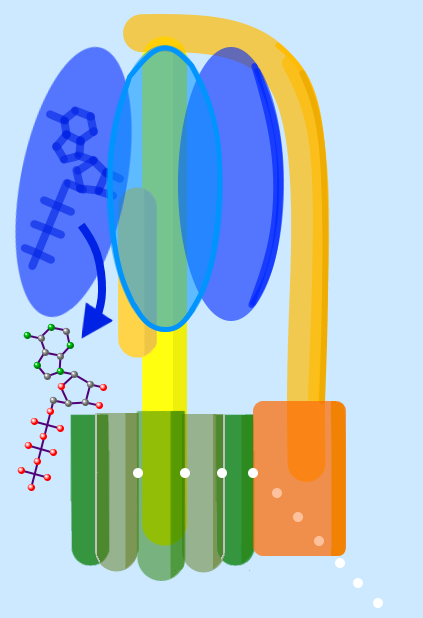 ATP Synthase - ATP Synthase is
a spinning turbine that manufactures the ATP batteries that your body needs to function.
It is driven by a flow of protons. Chris Ashcraft said it is made up of 500 proteins or
subunits. Describe the parts of this molecular machine and how it works. Does it look like
it was designed, or does it look like it formed by chance? How fast does it spin? How many
protons are needed for each ATP battery it makes? How many ATP batteries are made per second?
Since nearly all parts of a cell need ATP to function, ATP Synthase had to exist before
evolution could begin. Yet ATP Synthase is itself dependent on many other parts of the cell.
This machine is an example of irreducible complexity as well as chicken and egg dilemmas.
ATP Synthase - ATP Synthase is
a spinning turbine that manufactures the ATP batteries that your body needs to function.
It is driven by a flow of protons. Chris Ashcraft said it is made up of 500 proteins or
subunits. Describe the parts of this molecular machine and how it works. Does it look like
it was designed, or does it look like it formed by chance? How fast does it spin? How many
protons are needed for each ATP battery it makes? How many ATP batteries are made per second?
Since nearly all parts of a cell need ATP to function, ATP Synthase had to exist before
evolution could begin. Yet ATP Synthase is itself dependent on many other parts of the cell.
This machine is an example of irreducible complexity as well as chicken and egg dilemmas.
 Biology and Information
- Genes and proteins "can only be manufactured by molecular machines, and
their production requires entities like sequences and codes ... That is what really
divides matter from life. It is semiosis [symbol translation system] that does
not exist in the inanimate world, and that is why biology is not a complex form
of chemistry." - Marcello Barbieri, "Life is Semiosis - The Biosemiotic View of Nature,"
Cosmos and History: The Journal of Nature and Social Philosophy (4), 2008, p29-51
Biology and Information
- Genes and proteins "can only be manufactured by molecular machines, and
their production requires entities like sequences and codes ... That is what really
divides matter from life. It is semiosis [symbol translation system] that does
not exist in the inanimate world, and that is why biology is not a complex form
of chemistry." - Marcello Barbieri, "Life is Semiosis - The Biosemiotic View of Nature,"
Cosmos and History: The Journal of Nature and Social Philosophy (4), 2008, p29-51 Birds - Where did birds come from? Evolutionists are
still trying to convince each other that they came from dinosaurs. Why? Because
there no other candidates. Dr. Alan Feduccia, one of world's leading experts on
birds, commented on the idea that birds evolved from theropod dinosaurs: "It’s
biophysically impossible to evolve flight from such large bipeds with foreshortened
forelimbs and heavy, balancing tails, exactly the wrong anatomy for flight.”
– Science, 11/1/96, p. 721.
Birds - Where did birds come from? Evolutionists are
still trying to convince each other that they came from dinosaurs. Why? Because
there no other candidates. Dr. Alan Feduccia, one of world's leading experts on
birds, commented on the idea that birds evolved from theropod dinosaurs: "It’s
biophysically impossible to evolve flight from such large bipeds with foreshortened
forelimbs and heavy, balancing tails, exactly the wrong anatomy for flight.”
– Science, 11/1/96, p. 721. 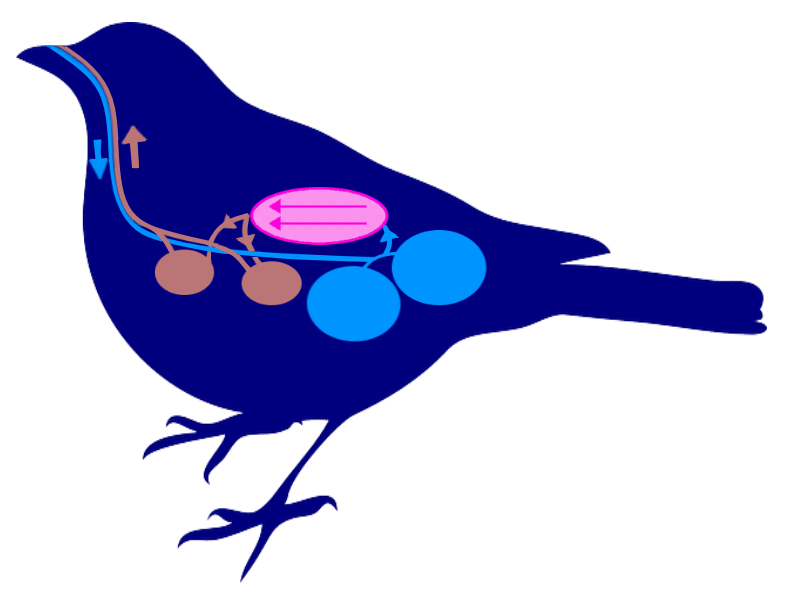 Bird Lungs - Unique among all creatures. Outside
air travels down the trachea, into the back sacs, into the lungs, into the front sacs,
back through the trachea, and out of the body. During inhalation the front and back
sacs are filled (not the lungs!). Outside air fills the back sacs, and air from the lungs
fills the front sacs. During exhalation the lungs are filled from the back sacs,
and air from the front sacs leaves the body. In the illustration the light blue sacs
represent fresh air, and the brown sacs represent spent air.
Bird Lungs - Unique among all creatures. Outside
air travels down the trachea, into the back sacs, into the lungs, into the front sacs,
back through the trachea, and out of the body. During inhalation the front and back
sacs are filled (not the lungs!). Outside air fills the back sacs, and air from the lungs
fills the front sacs. During exhalation the lungs are filled from the back sacs,
and air from the front sacs leaves the body. In the illustration the light blue sacs
represent fresh air, and the brown sacs represent spent air.
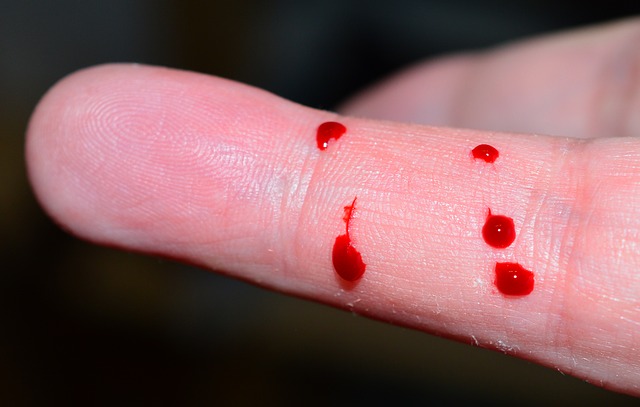 Blood Clotting Cascade - “Mr. Behe may be right
that given our current state of knowledge, good old Darwinian evolution cannot
explain the origin of blood clotting or cellular transport.” - James Shreeve,
“Design for Living,” New York Times, August 4, 1996.
Blood Clotting Cascade - “Mr. Behe may be right
that given our current state of knowledge, good old Darwinian evolution cannot
explain the origin of blood clotting or cellular transport.” - James Shreeve,
“Design for Living,” New York Times, August 4, 1996.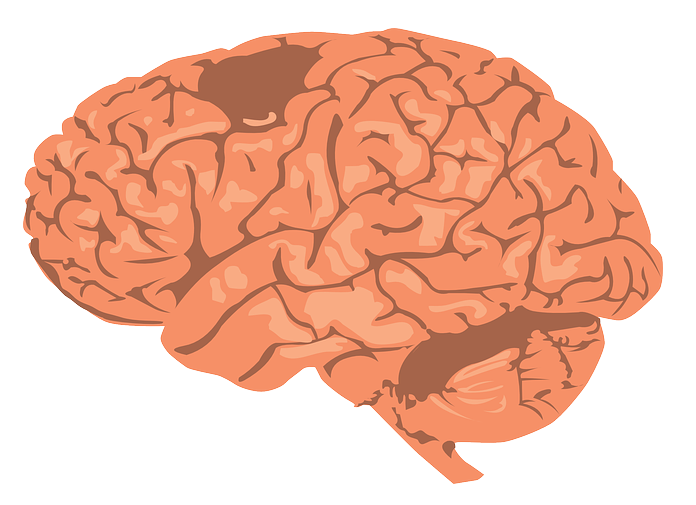 Brain - How many neurons does the human brain
have? How many synapses? How many neurons are in the human spinal column? How many
fibres are in the optic nerve? The auditory cortex? How many sodium pumps are in one
neuron? You could do an entire presentation on the activities in one neuron. You
could narrow your talk to sodium pumps and/or kinesin motors delivering information
packets to the synapse. Evolutionists speculate that the brain had to triple in size
in 3 million years, adding 66 billion new brain cells, each with 10,000 new synapses.
That is a new brain cell every 24 minutes and 7 new synapses every second. The fossil
record shows stasis, things remaining unchanged for tens of millions of years. Yet
evolutionists expect us to believe that the most advanced brain evolved in the
shortest time.
Brain - How many neurons does the human brain
have? How many synapses? How many neurons are in the human spinal column? How many
fibres are in the optic nerve? The auditory cortex? How many sodium pumps are in one
neuron? You could do an entire presentation on the activities in one neuron. You
could narrow your talk to sodium pumps and/or kinesin motors delivering information
packets to the synapse. Evolutionists speculate that the brain had to triple in size
in 3 million years, adding 66 billion new brain cells, each with 10,000 new synapses.
That is a new brain cell every 24 minutes and 7 new synapses every second. The fossil
record shows stasis, things remaining unchanged for tens of millions of years. Yet
evolutionists expect us to believe that the most advanced brain evolved in the
shortest time.
 Calculations - Reseach and report on calculations
that have been done regarding the
implausibility of evolution. Examples: Fred Hoyle's calculation about the occurrence
of two thousand enzymes; Hubert Yockey's calculation regarding cytochrome C;
Johnjoe McFadden's calculation about a billion universes each populated by
billions typing monkeys typing the code for a single gene.
Calculations - Reseach and report on calculations
that have been done regarding the
implausibility of evolution. Examples: Fred Hoyle's calculation about the occurrence
of two thousand enzymes; Hubert Yockey's calculation regarding cytochrome C;
Johnjoe McFadden's calculation about a billion universes each populated by
billions typing monkeys typing the code for a single gene.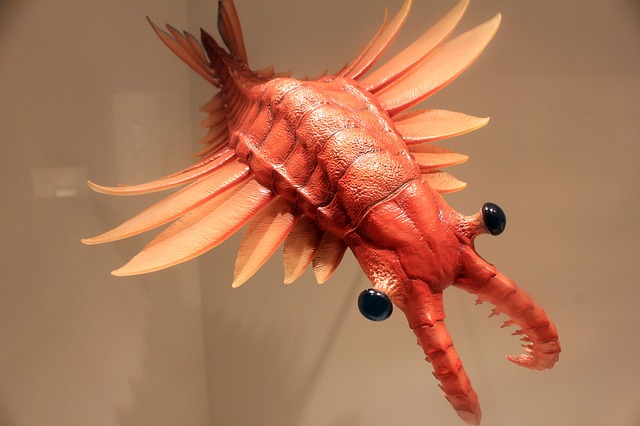 Cambrian Explosion - Cambrian rock contains a
wide variety of creatures with bizarre body plans - body plans that are very
different from each other. They appear fully developed in the fossil record with
no evolutionary history. Some people may complain that the Precambrian rock was
not capable of preserving fossils. But in China, in Precambrian rock, are found
soft-bodied sponge embryo fossils, showing that the strata was capable of
preserving animal fossils if they had existed.
Cambrian Explosion - Cambrian rock contains a
wide variety of creatures with bizarre body plans - body plans that are very
different from each other. They appear fully developed in the fossil record with
no evolutionary history. Some people may complain that the Precambrian rock was
not capable of preserving fossils. But in China, in Precambrian rock, are found
soft-bodied sponge embryo fossils, showing that the strata was capable of
preserving animal fossils if they had existed.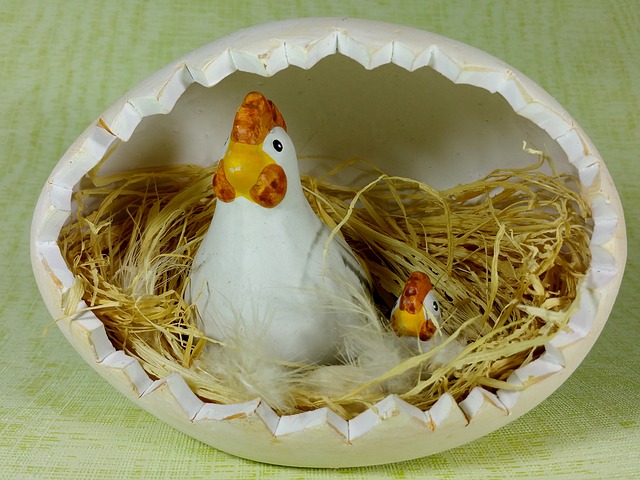 Chicken and Egg Dilemmas - Example: Dr. Jefferey
Tomkins said "you need DNA to make
proteins, you need DNA to make RNA, and you need RNA to make proteins. So, it's
worse than 'what came first, the chicken or the egg?'"
Present several different kinds of chicken and egg dilemmas. Describe one example
in technical detail why there is no path for one component existing without the
other component. One source is chapter 5 of Signature in the Cell by Stephen Meyer.
How many chicken and egg dilemmas can you identify in the Krebs Cycle?
Chicken and Egg Dilemmas - Example: Dr. Jefferey
Tomkins said "you need DNA to make
proteins, you need DNA to make RNA, and you need RNA to make proteins. So, it's
worse than 'what came first, the chicken or the egg?'"
Present several different kinds of chicken and egg dilemmas. Describe one example
in technical detail why there is no path for one component existing without the
other component. One source is chapter 5 of Signature in the Cell by Stephen Meyer.
How many chicken and egg dilemmas can you identify in the Krebs Cycle?
 Chromosome 2 - Evolutionists theorize that human
chromosome 2 was formed by two ape
chromosomes fusing together end to end. They were supposed to be ape chromosomes
12 and 13, conveniently renumbered 2A and 2B. If such a fusion took place, it
would be the only example of mammalian chromosomes fusing end to end. The ends of
chromosomes are full of telomeres which contain shelterin. Shelterin is specifically
designed to prevent end to end fusions. In the highly unlikely event that an end to
end fusion happened, there should be thousands of telomeres at the fusion site.
Even with a high rate of degeneration, thousands of TTAGGG telomeres should
remain side by side. They are not there. Rather, this "fusion site", which
should consist of non-functional code, contains functional code that is important
for 255 cell or tissue types. There should be two centromeres if two chromosomes
had fused end to end. But there is only one centromere, and it is not located
where either of the other two centromeres should have been. Tomkins and Bergman
say the supposed second degenerate centromere "is clearly unique and not
characteristic of a silenced degenerate centromere." - Jeffrey Tomkins and Jerry
Bergman, "The chromosome 2 fusion model of human evolution - part 2: re-analysis
of the genomic data"
Chromosome 2 - Evolutionists theorize that human
chromosome 2 was formed by two ape
chromosomes fusing together end to end. They were supposed to be ape chromosomes
12 and 13, conveniently renumbered 2A and 2B. If such a fusion took place, it
would be the only example of mammalian chromosomes fusing end to end. The ends of
chromosomes are full of telomeres which contain shelterin. Shelterin is specifically
designed to prevent end to end fusions. In the highly unlikely event that an end to
end fusion happened, there should be thousands of telomeres at the fusion site.
Even with a high rate of degeneration, thousands of TTAGGG telomeres should
remain side by side. They are not there. Rather, this "fusion site", which
should consist of non-functional code, contains functional code that is important
for 255 cell or tissue types. There should be two centromeres if two chromosomes
had fused end to end. But there is only one centromere, and it is not located
where either of the other two centromeres should have been. Tomkins and Bergman
say the supposed second degenerate centromere "is clearly unique and not
characteristic of a silenced degenerate centromere." - Jeffrey Tomkins and Jerry
Bergman, "The chromosome 2 fusion model of human evolution - part 2: re-analysis
of the genomic data"
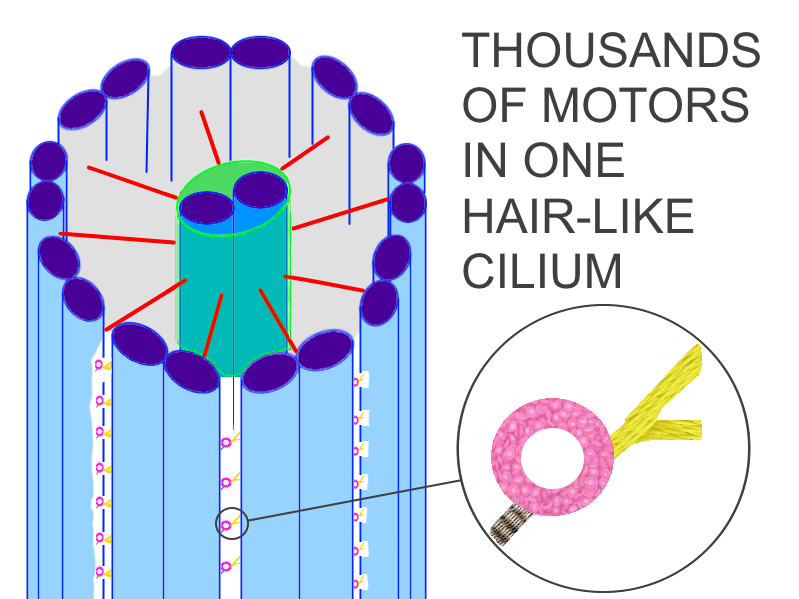 Cilium - Describe this wiggly hair with it multiple scaffolding
tubes, 200 kinds of protein, and thousands of internal motors. A good opportunity for multiple
illustrations, close up and farther away. Could any evolutionary progression produce a system
of many machines inside another multi-part machine? Michael Behe said that "nothing remotely
approaching such an evolutionary account of the cilium has been developed." He said, "All
sciences begin with speculation; only Darwinism routinely ends with it." -
Darwin's Black Box, in the "Afterword," 2006, pp. 267-268.
Cilium - Describe this wiggly hair with it multiple scaffolding
tubes, 200 kinds of protein, and thousands of internal motors. A good opportunity for multiple
illustrations, close up and farther away. Could any evolutionary progression produce a system
of many machines inside another multi-part machine? Michael Behe said that "nothing remotely
approaching such an evolutionary account of the cilium has been developed." He said, "All
sciences begin with speculation; only Darwinism routinely ends with it." -
Darwin's Black Box, in the "Afterword," 2006, pp. 267-268.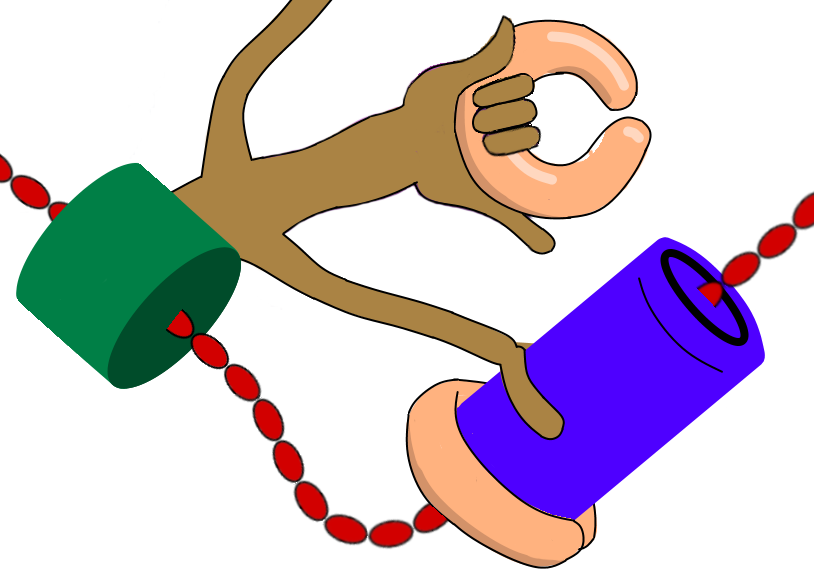 Clamp Loader - This amazing molecular machine, which
is like a wrist and a hand, is in constant motion loading ring-shaped sliding clamps
onto the lagging strand during DNA replication.
Clamp Loader - This amazing molecular machine, which
is like a wrist and a hand, is in constant motion loading ring-shaped sliding clamps
onto the lagging strand during DNA replication.
 Compactness and Power of DNA Code - When computer
programmers write code, they may have several goals in mind. First, it must work, but
beyond that they also may want their code to be compact, that is, to have a small
"footprint." After getting their code to work, they sometimes put in the extra
effort to make it small. No code in the world, bit for bit, is as compact and
powerful as DNA code. One cell is as complex as a city. Think of it this way:
A cell is a self-replicating city. Your body contains 100 trillion "cities."
Human DNA is 3 billion BITS long (not bytes - bits). When you do the math, that
calculates to 33,000 cities per bit of code. It would take an amazingly
talented and intelligent team of programmers to write code that compact and
powerful. (And for ten years evolutionists thought most of it was "junk.")
Compactness and Power of DNA Code - When computer
programmers write code, they may have several goals in mind. First, it must work, but
beyond that they also may want their code to be compact, that is, to have a small
"footprint." After getting their code to work, they sometimes put in the extra
effort to make it small. No code in the world, bit for bit, is as compact and
powerful as DNA code. One cell is as complex as a city. Think of it this way:
A cell is a self-replicating city. Your body contains 100 trillion "cities."
Human DNA is 3 billion BITS long (not bytes - bits). When you do the math, that
calculates to 33,000 cities per bit of code. It would take an amazingly
talented and intelligent team of programmers to write code that compact and
powerful. (And for ten years evolutionists thought most of it was "junk.")
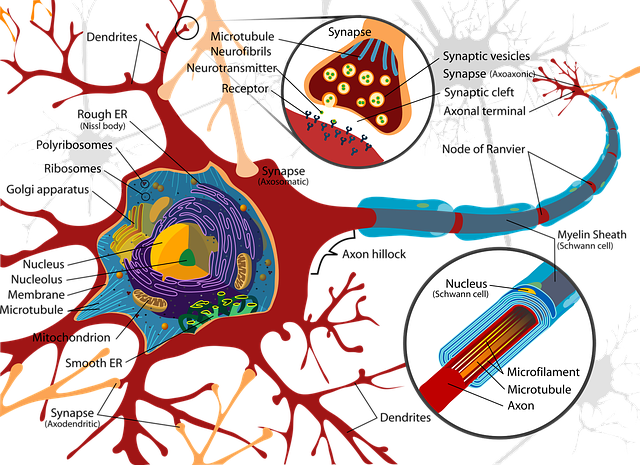 Complexity, Complexity, Complexity - The discoveries
inside the cell over the past ten years are stunning. Scientists know that their research
inside the cell has only just begun. A 747 airplane has 5 million parts, but a single
cell has billions of parts. Michael Behe said that if you search the scientific literature
on the evolution of molecular machines, "you will find an eerie and complete silence.
The complexity of life's foundation has paralyzed science's attempt to account for it;
molecular machines raise an as-yet-impenetrable barrier to Darwin's universal reach."
- Darwin's Black Box, 2006, p. 5.
Complexity, Complexity, Complexity - The discoveries
inside the cell over the past ten years are stunning. Scientists know that their research
inside the cell has only just begun. A 747 airplane has 5 million parts, but a single
cell has billions of parts. Michael Behe said that if you search the scientific literature
on the evolution of molecular machines, "you will find an eerie and complete silence.
The complexity of life's foundation has paralyzed science's attempt to account for it;
molecular machines raise an as-yet-impenetrable barrier to Darwin's universal reach."
- Darwin's Black Box, 2006, p. 5. Computer Code - Can you find documentation which indicates
that DNA contains features similar to human-made computer languages? Features like these:
loops, addresses, GOTOs, counters, If...Then...Else constructs, Object Oriented Programming,
variables that store numbers or other data, debugging, data validation, encryption and
decryption, inheritance, polymorphism, encapsulation, design patterns (like
Model-View-Controller). There are many other computer-like features that can be investigated.
Computer Code - Can you find documentation which indicates
that DNA contains features similar to human-made computer languages? Features like these:
loops, addresses, GOTOs, counters, If...Then...Else constructs, Object Oriented Programming,
variables that store numbers or other data, debugging, data validation, encryption and
decryption, inheritance, polymorphism, encapsulation, design patterns (like
Model-View-Controller). There are many other computer-like features that can be investigated.
 Developmental Gene Regulatory Networks (DGRNs) -
Small changes in these complex and sensitive
networks have catastrophic consequences for organisms. Stephen Meyer calls this an
"intractible" problem. Yet DGRNs would need to be modified, often drastically, to
change one creature into another. (Represented here by an illustration of fractals.)
Developmental Gene Regulatory Networks (DGRNs) -
Small changes in these complex and sensitive
networks have catastrophic consequences for organisms. Stephen Meyer calls this an
"intractible" problem. Yet DGRNs would need to be modified, often drastically, to
change one creature into another. (Represented here by an illustration of fractals.)
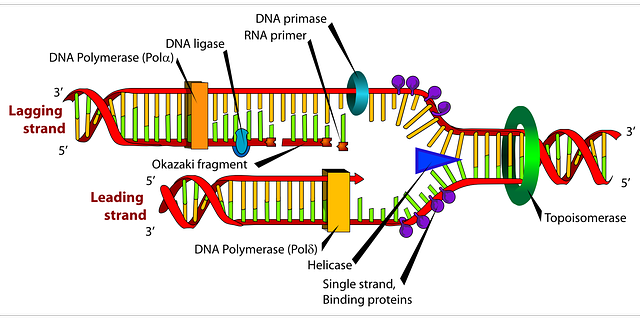 DNA Replication - Describe the ten machines that work
together in an orchestrated way to replicate DNA. The ten (or so) machines are: DNA Gyrase,
Helicase, Single Stranded Binding Proteins, two DNA Polymerase units, Beta Clamp,
DNA Polymerase III, Primase, Primers, DNA Polymerase I, and DNA Ligase.
DNA Replication - Describe the ten machines that work
together in an orchestrated way to replicate DNA. The ten (or so) machines are: DNA Gyrase,
Helicase, Single Stranded Binding Proteins, two DNA Polymerase units, Beta Clamp,
DNA Polymerase III, Primase, Primers, DNA Polymerase I, and DNA Ligase.
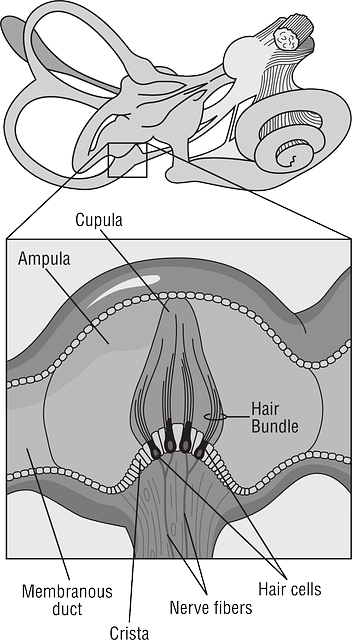 Ear - The bones in the mammalian ear evolved from bones
in the reptilian jaw? Where are the transitional forms? Why would location-changing,
shape-changing bones get "selected for?" How would the brain get hooked up? You can
describe (with the aid of slides) many of the intricate parts of the ear, as time
permits. Here are several of the parts: tympanic membrane, maleus, incas, stapes
(piston), bony labyrinth, perilymph (liquid), the flexible Round Window, vestibular
duct, tympanic duct, cochlear duct and its endolymph, Reisner’s membrane, basilar
membrane, tectorial membrane, and the organ of Corti ("a masterpiece of cellular
architecture") and its 16,000 hair cells.
Ear - The bones in the mammalian ear evolved from bones
in the reptilian jaw? Where are the transitional forms? Why would location-changing,
shape-changing bones get "selected for?" How would the brain get hooked up? You can
describe (with the aid of slides) many of the intricate parts of the ear, as time
permits. Here are several of the parts: tympanic membrane, maleus, incas, stapes
(piston), bony labyrinth, perilymph (liquid), the flexible Round Window, vestibular
duct, tympanic duct, cochlear duct and its endolymph, Reisner’s membrane, basilar
membrane, tectorial membrane, and the organ of Corti ("a masterpiece of cellular
architecture") and its 16,000 hair cells.
 Editing and Error Correction Systems -
“It is now clear that cells take great pains to
ensure that defective mRNAs, if made, are rapidly degraded. ... Indeed, recent
research has made it apparent that each splicing signal is inspected multiple times
by multiple different factors. ... The existence of multiple proofreading steps helps
to explain the extraordinary accuracy of splicing and certainly contributes to overall
complexity.” – Timothy W. Nilsen, “The Spliceosome: the most complex macromolecular
machine in the cell?”, http://onlinelibrary.wiley.com/doi/10.1002/bies.10394/epdf
Editing and Error Correction Systems -
“It is now clear that cells take great pains to
ensure that defective mRNAs, if made, are rapidly degraded. ... Indeed, recent
research has made it apparent that each splicing signal is inspected multiple times
by multiple different factors. ... The existence of multiple proofreading steps helps
to explain the extraordinary accuracy of splicing and certainly contributes to overall
complexity.” – Timothy W. Nilsen, “The Spliceosome: the most complex macromolecular
machine in the cell?”, http://onlinelibrary.wiley.com/doi/10.1002/bies.10394/epdf
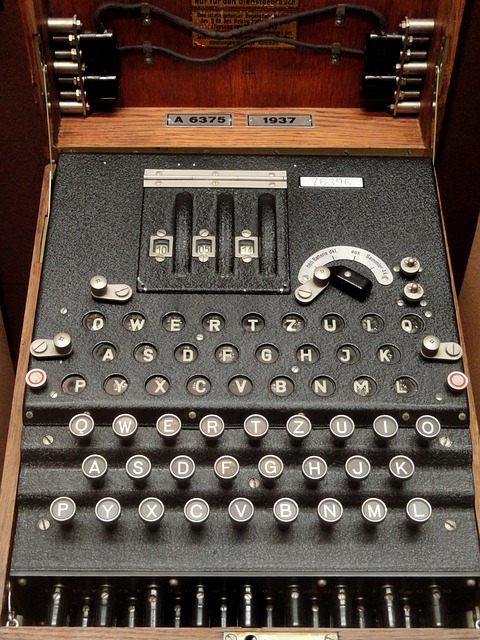 Encryption - Most of the DNA is “poly-functional.”
“’Poly-functional’ DNA sequences will exhibit several different meanings
on several different levels.” Code can be read forward, backwards, skipping letters, in
patterns, and perhaps 3-dimensionally. “Indeed, a study by Trifonov in 1989 has shown that
probably all DNA sequences in the genome encrypt for up to 12 different codes of
encryption!”
Encryption - Most of the DNA is “poly-functional.”
“’Poly-functional’ DNA sequences will exhibit several different meanings
on several different levels.” Code can be read forward, backwards, skipping letters, in
patterns, and perhaps 3-dimensionally. “Indeed, a study by Trifonov in 1989 has shown that
probably all DNA sequences in the genome encrypt for up to 12 different codes of
encryption!” Explosions of Different Animal Life - The Cambrian explosion
was not the only explosion that occurred. Different students could bring reports about the
Bat Explosion, the Bird Explosion, the Dinosaur Explosion, the Fish Explosion, the Flowering
Plant Explosion, the Flying Insect Explosion, and the Whale Explosion. Life forms appear
suddenly and without being preceded by gradual steps of evolution.
Explosions of Different Animal Life - The Cambrian explosion
was not the only explosion that occurred. Different students could bring reports about the
Bat Explosion, the Bird Explosion, the Dinosaur Explosion, the Fish Explosion, the Flowering
Plant Explosion, the Flying Insect Explosion, and the Whale Explosion. Life forms appear
suddenly and without being preceded by gradual steps of evolution.
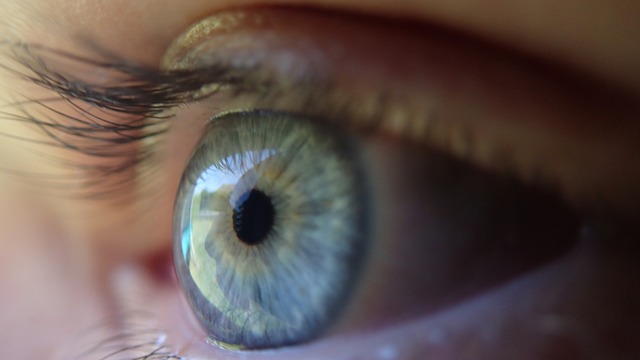 Eye (Human Eye) - Example of Constrained Optimization
- Constrained optimization is an engineering term pertaining to trade-offs engineers
ponder when designing a product. The human eye is an example of constrained optimization.
For a host of reasons the human eye is an amazing and exquisite instrument. You can
describe the many design features of the human eye and the excellent vision we enjoy.
Yet opponents of intelligent design point to the eye as one of the BEST examples of poor
design. Dr. Randolph Nesse told Richard Dawkins that because [unlike the human eye] the
nerves of the octopus eye are in the back, “It’s a better design absolutely than ours.”
Dawkins replied, “Nevertheless we probably see better than octopuses do.”
- "Randolph Nesse Interview (1/5) – Richard Dawkins"
(https://www.youtube.com/watch?v=pcnCJqDa1us)
Eye (Human Eye) - Example of Constrained Optimization
- Constrained optimization is an engineering term pertaining to trade-offs engineers
ponder when designing a product. The human eye is an example of constrained optimization.
For a host of reasons the human eye is an amazing and exquisite instrument. You can
describe the many design features of the human eye and the excellent vision we enjoy.
Yet opponents of intelligent design point to the eye as one of the BEST examples of poor
design. Dr. Randolph Nesse told Richard Dawkins that because [unlike the human eye] the
nerves of the octopus eye are in the back, “It’s a better design absolutely than ours.”
Dawkins replied, “Nevertheless we probably see better than octopuses do.”
- "Randolph Nesse Interview (1/5) – Richard Dawkins"
(https://www.youtube.com/watch?v=pcnCJqDa1us)
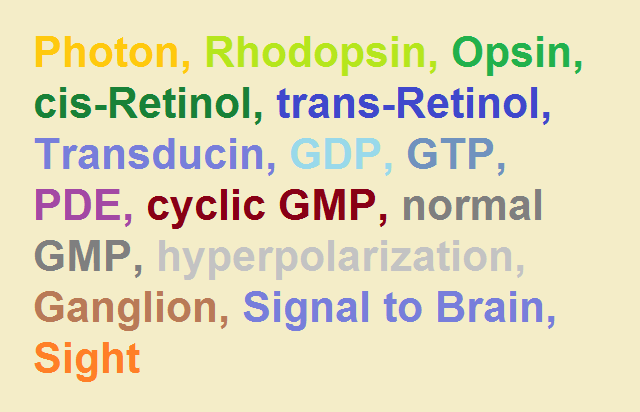 Eyesight Sequence - Phototransduction Cascade -
Many reactions occur when a photon hits the back of the eye. If you are knowledgeable
about this complicated sequence of events, perhaps you could explain it so that
less technical people could understand more about it. It involves Rhodopsin,
Opsin, cis-Retinol, trans-Retinol, Transducin, GDP, GTP, PDE, cyclic and
normal GMP, and hyperpolarization.
Eyesight Sequence - Phototransduction Cascade -
Many reactions occur when a photon hits the back of the eye. If you are knowledgeable
about this complicated sequence of events, perhaps you could explain it so that
less technical people could understand more about it. It involves Rhodopsin,
Opsin, cis-Retinol, trans-Retinol, Transducin, GDP, GTP, PDE, cyclic and
normal GMP, and hyperpolarization.
 Fact, Fact, Fact - Michael Ruse claims, "Evolution is
fact, fact, fact." The "fact" of evolution has been compared to the certainty of
gravity, the roundness of the earth, earth’s revolution around the sun, the molecular
composition of matter, digestion, apples falling out of trees, hunger, death, the
holocaust, and the heat of the sun. David Berlinski said that “very few phycisists
have been heard observing that gravity is as well established as evolution. ...they
are not stupid.” He says that evidence is unforthcoming and the theory is unpersuasive.
What arguments would you present to refute the notion that evolution is a fact?
Remember, you only have 15 minutes.
Fact, Fact, Fact - Michael Ruse claims, "Evolution is
fact, fact, fact." The "fact" of evolution has been compared to the certainty of
gravity, the roundness of the earth, earth’s revolution around the sun, the molecular
composition of matter, digestion, apples falling out of trees, hunger, death, the
holocaust, and the heat of the sun. David Berlinski said that “very few phycisists
have been heard observing that gravity is as well established as evolution. ...they
are not stupid.” He says that evidence is unforthcoming and the theory is unpersuasive.
What arguments would you present to refute the notion that evolution is a fact?
Remember, you only have 15 minutes.
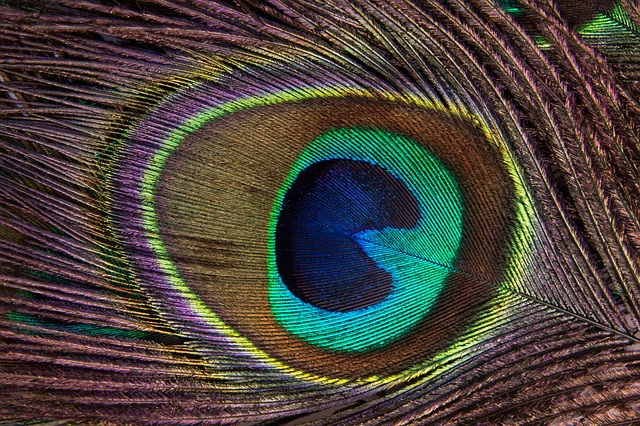 Feathers - What kind of mental gymnastics would
your mind have to do to imagine that a reptile scale evolved into a
bird feather? Are scales and feathers from the same layer of skin?
A feather has 1 rachis. Each rachis has 400 barbs on each side. Each barb has
400 proximal barbules on one side, and 400 distal barbules on the other side.
Each distal barbule has 20 hooklets that hook onto the proximal barbules.
A songbird with 2000 feathers can have over a billion hooklets.
Feathers - What kind of mental gymnastics would
your mind have to do to imagine that a reptile scale evolved into a
bird feather? Are scales and feathers from the same layer of skin?
A feather has 1 rachis. Each rachis has 400 barbs on each side. Each barb has
400 proximal barbules on one side, and 400 distal barbules on the other side.
Each distal barbule has 20 hooklets that hook onto the proximal barbules.
A songbird with 2000 feathers can have over a billion hooklets.
 Fine Tuning of the Universe - The fundamental physical
constants, such as the strong force, the weak force, gravity, Planck's constant,
electron mass, neutron mass, electron-neutron mass ratio, and the speed of light, to
name a few, must have mathematical values that are within extremely narrow ranges, or
matter and life would not exist. Paul Davies said that the universe "is fine-tuned for
the building blocks and environments that life requires." The relationships between
the constants must also be exact. There are so many of these constants and relationships,
and the precision is so fine, that many have wondered how this could be without being
designed.
Fine Tuning of the Universe - The fundamental physical
constants, such as the strong force, the weak force, gravity, Planck's constant,
electron mass, neutron mass, electron-neutron mass ratio, and the speed of light, to
name a few, must have mathematical values that are within extremely narrow ranges, or
matter and life would not exist. Paul Davies said that the universe "is fine-tuned for
the building blocks and environments that life requires." The relationships between
the constants must also be exact. There are so many of these constants and relationships,
and the precision is so fine, that many have wondered how this could be without being
designed.
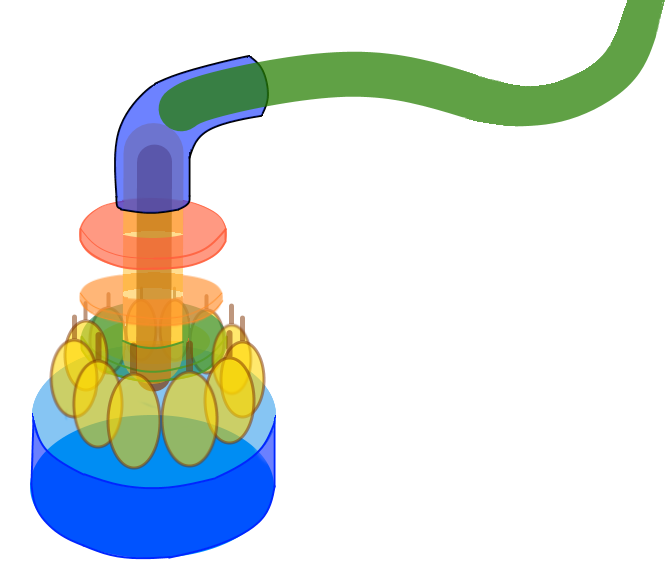 Flagellum in Bacteria - Is this inboard-outboard motor
better explained as a product of engineering and design? Or is it better explained as the
result of random occurrences? Provide illustrations and give a detailed description of its parts.
You can describe how the flagellum is assembled step by quick step in a precise and predetermined
manner. The assembly sequence and the software instructions that order the assembly of the many
parts are as irreducibly complex as the final product.
Flagellum in Bacteria - Is this inboard-outboard motor
better explained as a product of engineering and design? Or is it better explained as the
result of random occurrences? Provide illustrations and give a detailed description of its parts.
You can describe how the flagellum is assembled step by quick step in a precise and predetermined
manner. The assembly sequence and the software instructions that order the assembly of the many
parts are as irreducibly complex as the final product.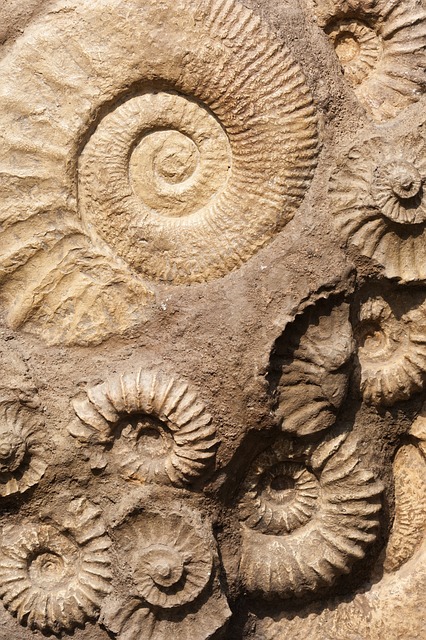 Fossil Record - The fossil record is marked by sudden
appearance and stasis. "Sudden appearance" means that a creature different than any other
will appear in the fossil record fully formed with no fossil stages of development preceding it.
"Stasis" means that the creature continues unchanged in the fossil record until it goes extinct
or until today. Darwin himself and many other evolutionists have mourned the absence of
transitional forms in the fossil record.
Fossil Record - The fossil record is marked by sudden
appearance and stasis. "Sudden appearance" means that a creature different than any other
will appear in the fossil record fully formed with no fossil stages of development preceding it.
"Stasis" means that the creature continues unchanged in the fossil record until it goes extinct
or until today. Darwin himself and many other evolutionists have mourned the absence of
transitional forms in the fossil record.
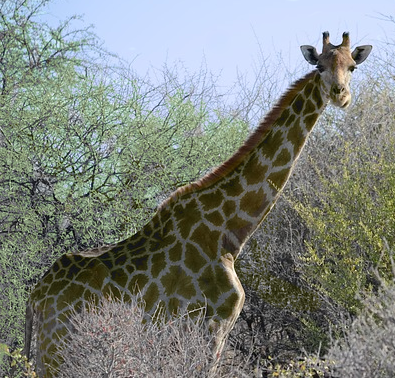 Giraffe Neck - The valves in a giraffe's neck protect its brain
from deadly blood pressure when it lowers its head for a drink of water. Could this series of
valves exist without being designed? You could include artwork that illustrates the internal valves.
Giraffe Neck - The valves in a giraffe's neck protect its brain
from deadly blood pressure when it lowers its head for a drink of water. Could this series of
valves exist without being designed? You could include artwork that illustrates the internal valves.
 History of Irreducible Complexity - In 1918 it was called
Murial Interlocking Complexity. In 1939 it was called simply Interlocking Complexity. Or
you could bring a report on the history of the Intelligent Design movement.
History of Irreducible Complexity - In 1918 it was called
Murial Interlocking Complexity. In 1939 it was called simply Interlocking Complexity. Or
you could bring a report on the history of the Intelligent Design movement.
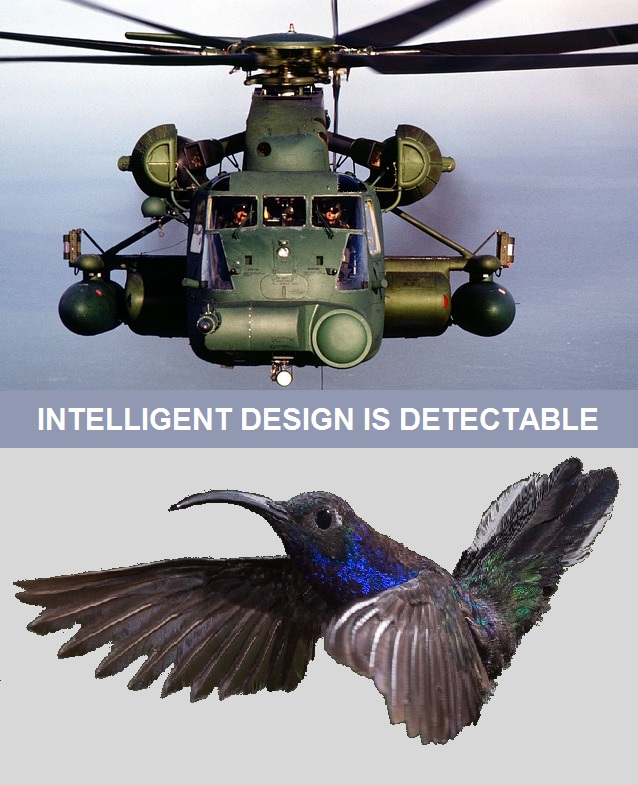 Intelligent Design - Dr. Michael Behe said, "The result of
these cumulative efforts to investigate the cell—to investigate life at the molecular
level—is a loud, clear, piercing cry of ‘design!’ The result is so unambiguous and so
significant that it must be ranked as one of the greatest achievements in the history of
science. The discovery rivals those of Newton and Einstein, Lavoisier and Schrödinger,
Pasteur, and Darwin. The observation of the intelligent design of life is as momentous as
the observation that the earth goes around the sun." - Dr. Michael Behe, Darwin’s
Black Box: The Biochemical Challenge to Evolution, 1996, pp.232-233.
Intelligent Design - Dr. Michael Behe said, "The result of
these cumulative efforts to investigate the cell—to investigate life at the molecular
level—is a loud, clear, piercing cry of ‘design!’ The result is so unambiguous and so
significant that it must be ranked as one of the greatest achievements in the history of
science. The discovery rivals those of Newton and Einstein, Lavoisier and Schrödinger,
Pasteur, and Darwin. The observation of the intelligent design of life is as momentous as
the observation that the earth goes around the sun." - Dr. Michael Behe, Darwin’s
Black Box: The Biochemical Challenge to Evolution, 1996, pp.232-233. Interactome - the complete map of protein to protein interactions
(PPIs) within a cell. PPI databases are now available. The communication systems between the
brain and all parts of the body, between cells, and between proteins inside cells is more
sophisticated than an internet superhighway.
Interactome - the complete map of protein to protein interactions
(PPIs) within a cell. PPI databases are now available. The communication systems between the
brain and all parts of the body, between cells, and between proteins inside cells is more
sophisticated than an internet superhighway.
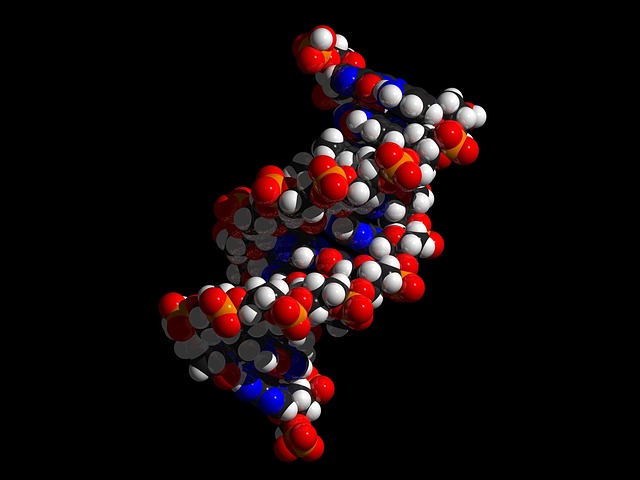 Irreducible Complexity -
Describe one irreducibly complex system or molecular machine and explain why this
presents a challenge to Darwin's idea of "numerous, successive, slight modifications."
For example, William Dembski calls Protein Synthesis "irreducible complexity on steroids."
Another approach could be to briefly describe several irreducibly complex machines or
systems and explain how one is dependent on another.
Irreducible Complexity -
Describe one irreducibly complex system or molecular machine and explain why this
presents a challenge to Darwin's idea of "numerous, successive, slight modifications."
For example, William Dembski calls Protein Synthesis "irreducible complexity on steroids."
Another approach could be to briefly describe several irreducibly complex machines or
systems and explain how one is dependent on another.
 "Junk" DNA - Only a small portion of the DNA code
directly codes for proteins. It was presumed by many evolutionists that the majority
of the genome was "junk". This presumption stifled scientific research and slowed our
understanding of the genome. Since DNA sequencing techniques have vastly improved in
the past several years, science has discovered that 80% of the genome has known
functionality - largely providing vital gene regulation. Many scientists believe
that with further research the functional portions of the genetic code will
approach 100%. Evolutionists once loudly touted "junk" DNA as strong evidence for
evolution. This talk has quieted in recent years.
"Junk" DNA - Only a small portion of the DNA code
directly codes for proteins. It was presumed by many evolutionists that the majority
of the genome was "junk". This presumption stifled scientific research and slowed our
understanding of the genome. Since DNA sequencing techniques have vastly improved in
the past several years, science has discovered that 80% of the genome has known
functionality - largely providing vital gene regulation. Many scientists believe
that with further research the functional portions of the genetic code will
approach 100%. Evolutionists once loudly touted "junk" DNA as strong evidence for
evolution. This talk has quieted in recent years.
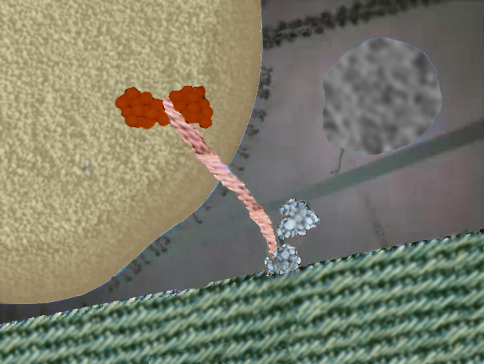 Kinesin Motors -
In order for a kinesin motor to pull a vesicle of cargo to a specific location
within the cell, a number of things must happen. Some molecular machine must
build the kinesin motor. An information system must be in place so that a distressed
part of the cell can notify the cell's headquarters that it needs something and so
that headquarters can order the correct components to be
delivered to the correct location. Some molecular machine must assemble the vesicle
that the kinesin motor will transport. The contents inside the vesicle must also be
manufactured. A molecular address label is attached to the kinesin motor or the
vesicle. The microtubule highway that the kinesin motor walks on has to be built by
a molecular machine. The machine that manufactures the microtubule must itself be
manufactured. Are these complexities better explained by random accidents or by a
mind capable of planning and orchestrating them?
Kinesin Motors -
In order for a kinesin motor to pull a vesicle of cargo to a specific location
within the cell, a number of things must happen. Some molecular machine must
build the kinesin motor. An information system must be in place so that a distressed
part of the cell can notify the cell's headquarters that it needs something and so
that headquarters can order the correct components to be
delivered to the correct location. Some molecular machine must assemble the vesicle
that the kinesin motor will transport. The contents inside the vesicle must also be
manufactured. A molecular address label is attached to the kinesin motor or the
vesicle. The microtubule highway that the kinesin motor walks on has to be built by
a molecular machine. The machine that manufactures the microtubule must itself be
manufactured. Are these complexities better explained by random accidents or by a
mind capable of planning and orchestrating them?
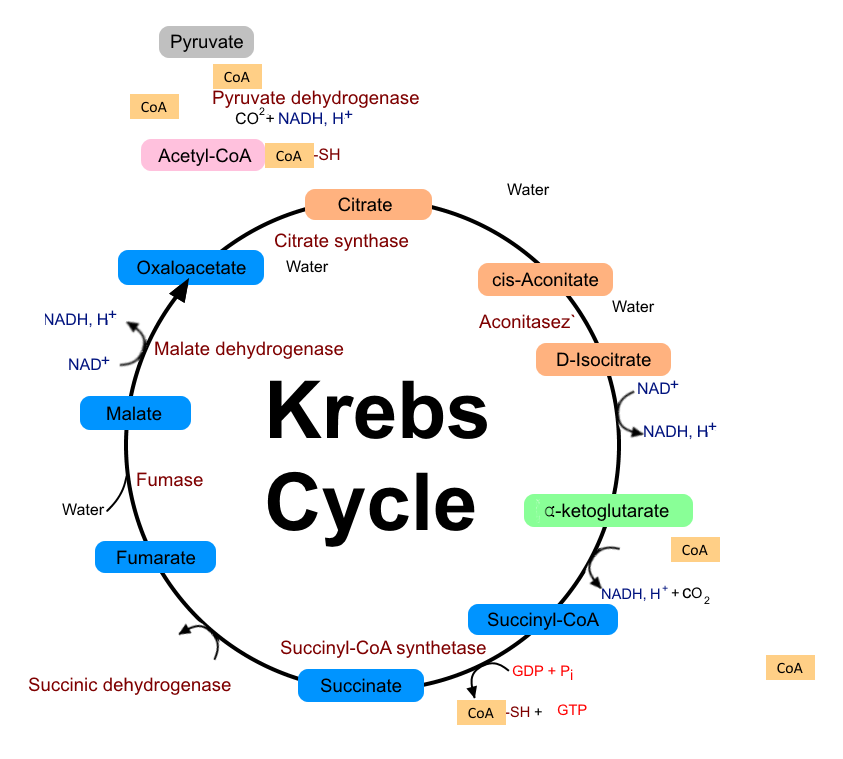 Krebs Cycle
- Is this an example of irreducible complexity? If you speak on this topic, your
challenge will be to explain the various enzymes and chemical reactions in
terms a typical audience can understand. Explain why the various dependencies
inside the the Krebs Cycle and outside of it would make an evolutionary
pathway hard to find.
Krebs Cycle
- Is this an example of irreducible complexity? If you speak on this topic, your
challenge will be to explain the various enzymes and chemical reactions in
terms a typical audience can understand. Explain why the various dependencies
inside the the Krebs Cycle and outside of it would make an evolutionary
pathway hard to find.
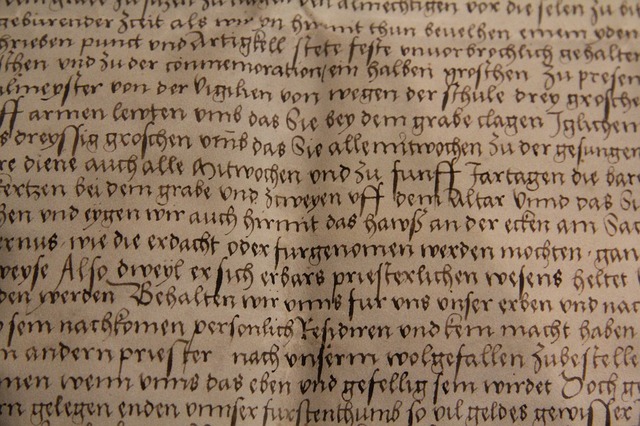 Language - How do you enter random letters into a text
written in any language and make the text better? This was a question raised at the
original Wistar Symposium in 1966. The question is just as important 50 years later.
It can be empirically and consistently demonstrated that the random insertion or
replacement of letters will destroy any text.
Language - How do you enter random letters into a text
written in any language and make the text better? This was a question raised at the
original Wistar Symposium in 1966. The question is just as important 50 years later.
It can be empirically and consistently demonstrated that the random insertion or
replacement of letters will destroy any text.
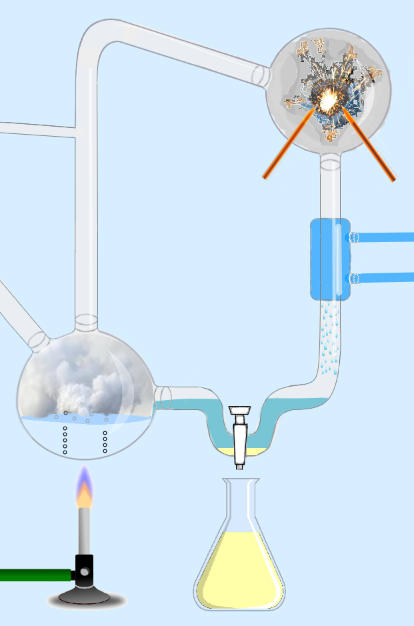 Miller-Urey Experiment - All variations of
this experiment performed during the 50 years since the original Miller-Urey
experiment have fallen far short of producing a protein. Only left handed
amino acids can be in proteins, but half of the amino acids produced in this
experiment are right handed. Not all of the 20 needed amino acids are
produced. Amino acids cannot be assembled in water to form a protein.
Miller-Urey Experiment - All variations of
this experiment performed during the 50 years since the original Miller-Urey
experiment have fallen far short of producing a protein. Only left handed
amino acids can be in proteins, but half of the amino acids produced in this
experiment are right handed. Not all of the 20 needed amino acids are
produced. Amino acids cannot be assembled in water to form a protein.
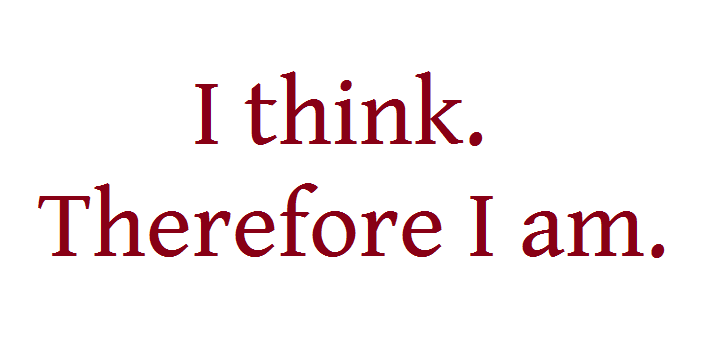 Minds and Consciousness - What are minds? They are
not imaginary. They are real. A mind is not the same thing as a brain. What is
consciousness? What Darwinian process can explain it? Can unthinking, unconscious
dead matter spontaneously arise to produce life, minds, and consciousness?
Minds and Consciousness - What are minds? They are
not imaginary. They are real. A mind is not the same thing as a brain. What is
consciousness? What Darwinian process can explain it? Can unthinking, unconscious
dead matter spontaneously arise to produce life, minds, and consciousness?
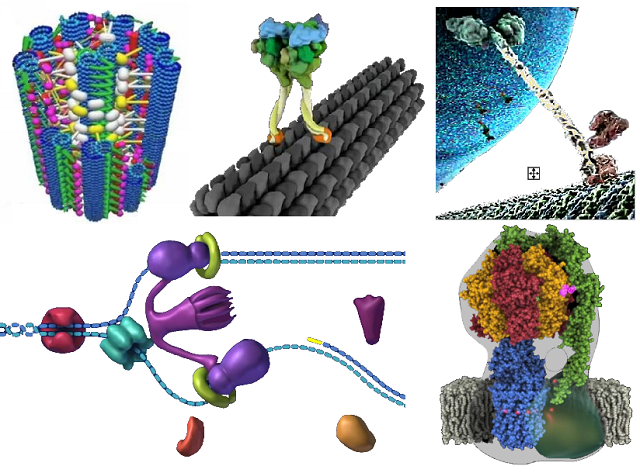 Molecular Machines - A "single research project in
2006 reported the discovery of over 250 new molecular machines in yeast alone!" -
"The Closest Look Ever At The Cell's Machines,” ScienceDaily.com (January 24, 2006).
Pick your favorite molecular machine and give a detailed report on it (with plenty
of illustrations). Or do a summary report in which you briefly describe several machines.
Molecular Machines - A "single research project in
2006 reported the discovery of over 250 new molecular machines in yeast alone!" -
"The Closest Look Ever At The Cell's Machines,” ScienceDaily.com (January 24, 2006).
Pick your favorite molecular machine and give a detailed report on it (with plenty
of illustrations). Or do a summary report in which you briefly describe several machines.
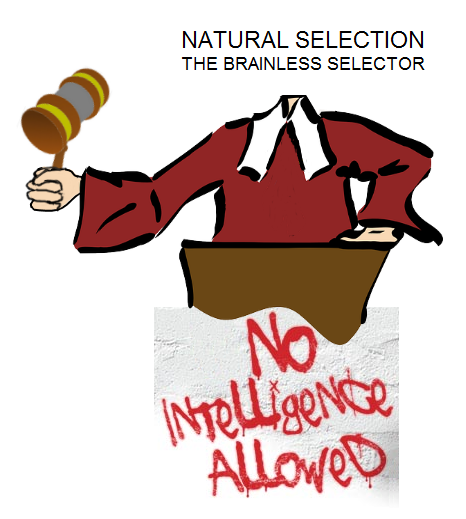 Natural Selection - Charles Darwin is credited with
making this term popular, and he is credited with giving evolution a "mechanism."
Is it reasonable to call natural selection a "mechanism?" What is natural selection?
Is it one thing or is it a collection of things? Is it the "selector," that is, the
"thing" that does the selecting? Or is it the thing that gets selected? Or is it both?
Can natural selection be defined? Is natural selection simply "whatever happens?"
Contrast the mechanisms (actual physical machines that perform specific functions)
found in the cell with the "mechanism" of natural selection.
Natural Selection - Charles Darwin is credited with
making this term popular, and he is credited with giving evolution a "mechanism."
Is it reasonable to call natural selection a "mechanism?" What is natural selection?
Is it one thing or is it a collection of things? Is it the "selector," that is, the
"thing" that does the selecting? Or is it the thing that gets selected? Or is it both?
Can natural selection be defined? Is natural selection simply "whatever happens?"
Contrast the mechanisms (actual physical machines that perform specific functions)
found in the cell with the "mechanism" of natural selection.
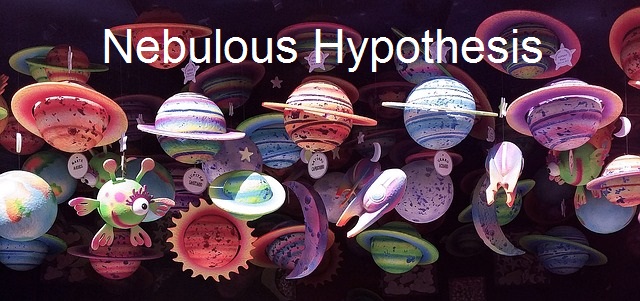 Nebular Hypothesis - No one knows how gas clouds
could condense to make stars, because the gas pressure pushing the particles apart
is 60 thousand times greater than the gravity pulling in.
Nebular Hypothesis - No one knows how gas clouds
could condense to make stars, because the gas pressure pushing the particles apart
is 60 thousand times greater than the gravity pulling in.
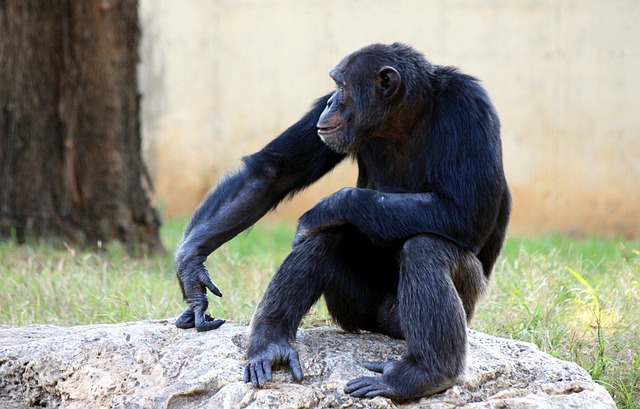 Ninety-Eight Percent - Evolutionists
speculated that the chimp genome was 98% similar to the human genome long
before the initial draft of the chimp genome was announced in 2005.
Jefferey Tomkins and Jerry Bergman in an article titled “Genomic monkey
business” said the reason chimp and human genomes are claimed to be 98%
similar is that the samples chosen for comparison were prescreened to
eliminate sections of code that were too dissimilar. Areas of code that
could not be aligned were typically omitted, masked, or not reported.
Based on analysis of existing data, including the 2005 chimpanzee genome
report, chimp genome similarity is not more than 87% identical, and
possibly only 81% identical. If the 98% figure were correct, which
it is not, that would still indicate 60 million differences between
human and chimp DNA.
Ninety-Eight Percent - Evolutionists
speculated that the chimp genome was 98% similar to the human genome long
before the initial draft of the chimp genome was announced in 2005.
Jefferey Tomkins and Jerry Bergman in an article titled “Genomic monkey
business” said the reason chimp and human genomes are claimed to be 98%
similar is that the samples chosen for comparison were prescreened to
eliminate sections of code that were too dissimilar. Areas of code that
could not be aligned were typically omitted, masked, or not reported.
Based on analysis of existing data, including the 2005 chimpanzee genome
report, chimp genome similarity is not more than 87% identical, and
possibly only 81% identical. If the 98% figure were correct, which
it is not, that would still indicate 60 million differences between
human and chimp DNA.
 Not Enough Time - Evolutionists often say that
given enough time anything is possible. That is precisely the problem. There
is not enough time to evolve living things - not in 20 billion years, not in
200 billion years. That is why mathematics is so devastating to the theory of
evolution.
Not Enough Time - Evolutionists often say that
given enough time anything is possible. That is precisely the problem. There
is not enough time to evolve living things - not in 20 billion years, not in
200 billion years. That is why mathematics is so devastating to the theory of
evolution. Number List - Make a list of significant numbers
that Darwinism will be obliged to explain. Number of distances to the sun our DNA
would be if laid end-to-end. How many cells are in the human body? How many neurons
are in the brain? How many sodium pumps are in one neuron? How many red blood cells
does the human body produce per second? How many ATP batteries does the human body
burn per second? How many mitochondria are in one cell? How many ribosomes are in
one cell? How many different kinds of proteins are in the human body? How many
species are in the world? How many different kinds of proteins are in all animal
species? How many combinatorial experiments would be needed to make that many
proteins? How many differences are there between a whale and any land animal?
There are many other interesting numbers that can be researched. Evolution
has only 640,000,000,000,000,000 seconds to produce all these things. The
combinatorial complexity of a single protein exceeds the Universal Plausibility
Bound. A list of numbers that evolution must explain will help demonstrate the
implausibility of the theory.
Number List - Make a list of significant numbers
that Darwinism will be obliged to explain. Number of distances to the sun our DNA
would be if laid end-to-end. How many cells are in the human body? How many neurons
are in the brain? How many sodium pumps are in one neuron? How many red blood cells
does the human body produce per second? How many ATP batteries does the human body
burn per second? How many mitochondria are in one cell? How many ribosomes are in
one cell? How many different kinds of proteins are in the human body? How many
species are in the world? How many different kinds of proteins are in all animal
species? How many combinatorial experiments would be needed to make that many
proteins? How many differences are there between a whale and any land animal?
There are many other interesting numbers that can be researched. Evolution
has only 640,000,000,000,000,000 seconds to produce all these things. The
combinatorial complexity of a single protein exceeds the Universal Plausibility
Bound. A list of numbers that evolution must explain will help demonstrate the
implausibility of the theory.
 Origin of Life - Abiogenesis - Evolution
of Life - Chemical Evolution. The evolution of life is the most intractable of
the many intractable problems evolution has. No one has a clue how life could
have evolved. Francis Crick, co-discoverer of the structure of DNA said, "If a
particular amino acid sequence was selected by chance, how rare an event would
this be? ... The great majority of sequences can never have been synthesized at
all, at any time." - Life Itself: Its Origin and Nature, 1981, pp 51-52.
Origin of Life - Abiogenesis - Evolution
of Life - Chemical Evolution. The evolution of life is the most intractable of
the many intractable problems evolution has. No one has a clue how life could
have evolved. Francis Crick, co-discoverer of the structure of DNA said, "If a
particular amino acid sequence was selected by chance, how rare an event would
this be? ... The great majority of sequences can never have been synthesized at
all, at any time." - Life Itself: Its Origin and Nature, 1981, pp 51-52.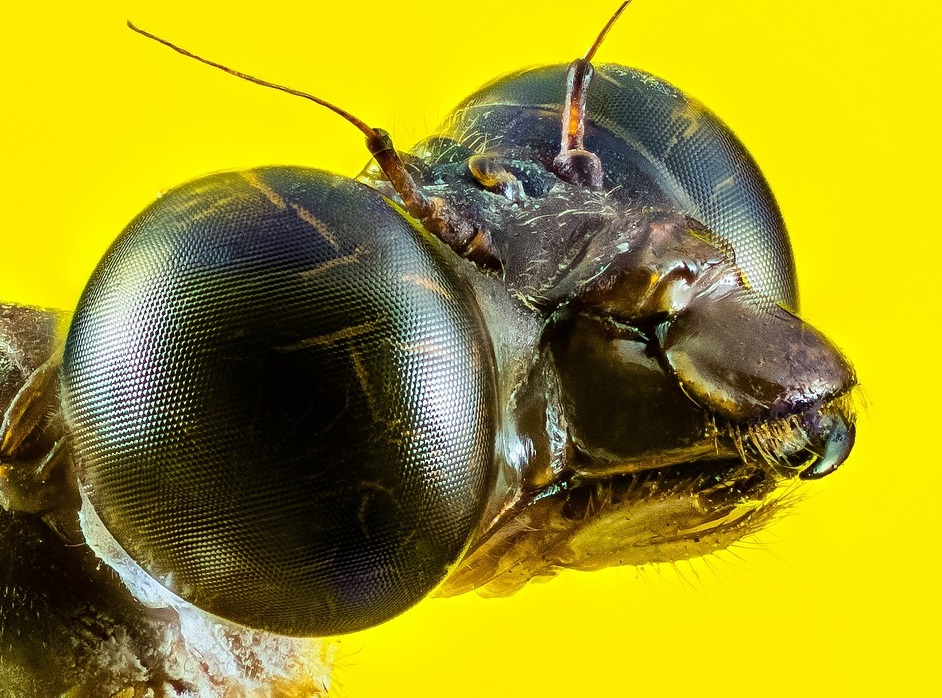 Parallel Evolution - How likely is it that . . .
 Phylogenetic Tree or Homology - Tree of life
Microbiologist Michael Syvanen, who tried to construct a phylogenetic tree by
studying 2000 genes from humans, frogs, sea squirts, sea urchins, fruit flies
and nematodes, said, “We’ve just annihilated the tree of life.” - Graham Lawton,
“Why Darwin Was Wrong About the Tree of Life”, New Scientist 2692,
21 Jan 2009.
Phylogenetic Tree or Homology - Tree of life
Microbiologist Michael Syvanen, who tried to construct a phylogenetic tree by
studying 2000 genes from humans, frogs, sea squirts, sea urchins, fruit flies
and nematodes, said, “We’ve just annihilated the tree of life.” - Graham Lawton,
“Why Darwin Was Wrong About the Tree of Life”, New Scientist 2692,
21 Jan 2009.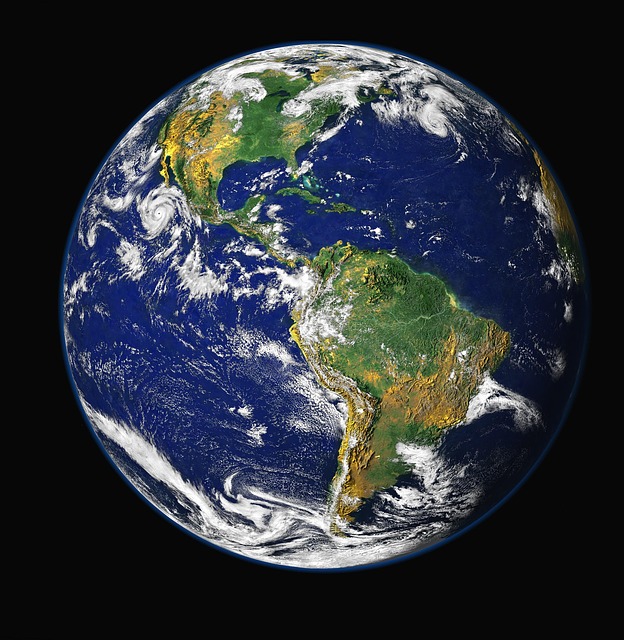 Planet Earth - The privileged planet. Guillermo
Gonzalez and Jay Richards noted that Earth is situated in a habitable zone of
our galaxy making complex life possible. Earth also has those qualities that
allow for scientific observation.
Planet Earth - The privileged planet. Guillermo
Gonzalez and Jay Richards noted that Earth is situated in a habitable zone of
our galaxy making complex life possible. Earth also has those qualities that
allow for scientific observation. Primordial Soup - Explain why the chemical reactions
necessary to produce life cannot happen in primordial soup or any kind of chemical soup.
Primordial Soup - Explain why the chemical reactions
necessary to produce life cannot happen in primordial soup or any kind of chemical soup.
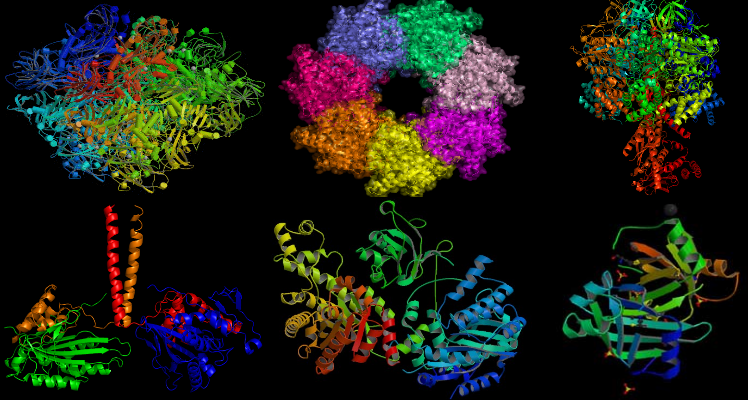 Proteins - There are thousands of kinds of proteins.
They are found in a huge variety of interesting, complex, and bizarre shapes.
There are many examples of proteins on the internet. You can make your own picture
of one of these proteins. Change the colors, position, background, lighting effects,
and shadow effects. Label the protein and describe what it does. Can proteins
spontaneously generate from non-living chemicals? How many proteins are there?
Different sources give different numbers. Explain that proteins can only be
manufactured by molecular machines. Describe the process by which proteins are made.
Explain that proteins are often made with specific shapes to perfectly fit other
proteins to make large complexes of proteins.
Proteins - There are thousands of kinds of proteins.
They are found in a huge variety of interesting, complex, and bizarre shapes.
There are many examples of proteins on the internet. You can make your own picture
of one of these proteins. Change the colors, position, background, lighting effects,
and shadow effects. Label the protein and describe what it does. Can proteins
spontaneously generate from non-living chemicals? How many proteins are there?
Different sources give different numbers. Explain that proteins can only be
manufactured by molecular machines. Describe the process by which proteins are made.
Explain that proteins are often made with specific shapes to perfectly fit other
proteins to make large complexes of proteins.
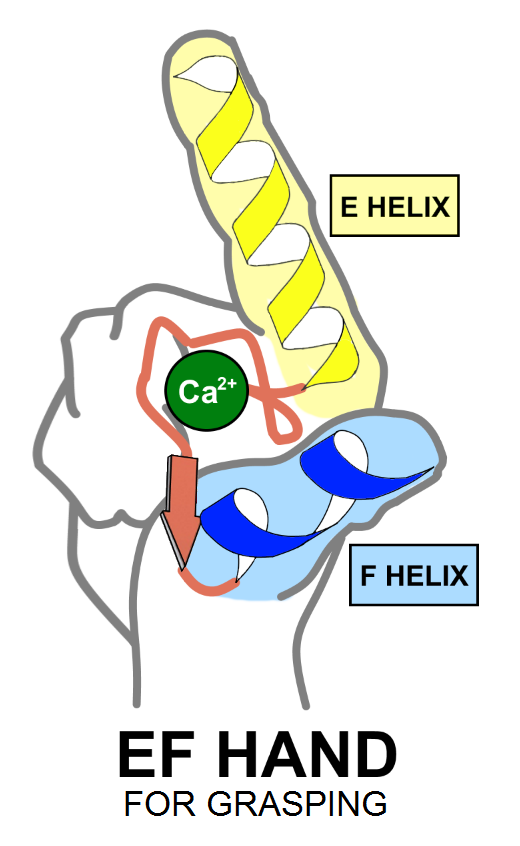 Protein Folding - Could amazingly complex proteins
that almost look like they were woven by knitting needles happen by chance?
Is it true that amino acid chains get threaded through portions of itself in ways
that mere folding or bending cannot accomplish? Judith Frydman, Professor of Biology
and Genetics at Stanford School of Medicine, describes molecular machines that
help proteins get into their proper shape. She said, "One family consists of small
chaperones shaped like tiny hands. Each chaperone grasps the protein's amino acid
chain, lets it go, then grasps it again until the protein is properly folded."
- Stanford Report, October 4, 2000
Protein Folding - Could amazingly complex proteins
that almost look like they were woven by knitting needles happen by chance?
Is it true that amino acid chains get threaded through portions of itself in ways
that mere folding or bending cannot accomplish? Judith Frydman, Professor of Biology
and Genetics at Stanford School of Medicine, describes molecular machines that
help proteins get into their proper shape. She said, "One family consists of small
chaperones shaped like tiny hands. Each chaperone grasps the protein's amino acid
chain, lets it go, then grasps it again until the protein is properly folded."
- Stanford Report, October 4, 2000
 Protein Synthesis - How a protein gets built.
William Dembski calls protein synthesis irreducible complexity on steroids.
Describe all the machines and steps involved in this complicated process.
Here is an over simplification: DNA helicase separates the two strands of DNA.
RNA polymerase makes a single-stranded copy from one of the DNA strands in
a process called Transcription. The copy is called Messenger RNA (mRNA).
Another machine transports the mRNA from the cell's nucleus through the Nuclear
Pore Complex (an information recognition device that controls the flow of information
in and out of the nucleus) and into the cytoplasm. The Messenger RNA transcript goes
to a two-part chemical factory called a Ribosome. Here is where Translation occurs.
Each set of three nucleotides in the mRNA is called a codon. Other machines called
Transfer RNAs (tRNA) begin entering the ribosome. At one end of the tRNA is a device
that matches a codon. On the other end is an amino acid. The tRNA leaves the amino
acid and exits. The next tRNA enters and adds its amino acid to the previous one.
So an amino acid chain is formed. After the amino acid chain is built, machines
called chaperones help fold the chain into its proper shape turning it into a protein.
In some cases the chain must be transported to a barrel-shape machine called a
Chaperonin where it is folded into a protein. Another machine transports the new
protein to the place in the cell where it is needed to do its job.
Protein Synthesis - How a protein gets built.
William Dembski calls protein synthesis irreducible complexity on steroids.
Describe all the machines and steps involved in this complicated process.
Here is an over simplification: DNA helicase separates the two strands of DNA.
RNA polymerase makes a single-stranded copy from one of the DNA strands in
a process called Transcription. The copy is called Messenger RNA (mRNA).
Another machine transports the mRNA from the cell's nucleus through the Nuclear
Pore Complex (an information recognition device that controls the flow of information
in and out of the nucleus) and into the cytoplasm. The Messenger RNA transcript goes
to a two-part chemical factory called a Ribosome. Here is where Translation occurs.
Each set of three nucleotides in the mRNA is called a codon. Other machines called
Transfer RNAs (tRNA) begin entering the ribosome. At one end of the tRNA is a device
that matches a codon. On the other end is an amino acid. The tRNA leaves the amino
acid and exits. The next tRNA enters and adds its amino acid to the previous one.
So an amino acid chain is formed. After the amino acid chain is built, machines
called chaperones help fold the chain into its proper shape turning it into a protein.
In some cases the chain must be transported to a barrel-shape machine called a
Chaperonin where it is folded into a protein. Another machine transports the new
protein to the place in the cell where it is needed to do its job.
 Proteaosome - This cylindrical molecular machine is
like a garbage disposal. It finds viruses that have been marked for destruction
by a Y-shaped molecule and then chews up and destroys the virus.
Proteaosome - This cylindrical molecular machine is
like a garbage disposal. It finds viruses that have been marked for destruction
by a Y-shaped molecule and then chews up and destroys the virus.
 Publish or Perish - A theory that cannot be defended in
professional scientific journals should be banished. "There is no publication in the
scientific literature - in prestigious journals, specialty journals, or books - that
describes how molecular evolution of any real, complex, biochemical system either did
occur or even might have occurred." "[T]he assertion of Darwinian molecular evolution
is merely bluster." - Darwin's Black Box, 2006, pp. 185-186
Publish or Perish - A theory that cannot be defended in
professional scientific journals should be banished. "There is no publication in the
scientific literature - in prestigious journals, specialty journals, or books - that
describes how molecular evolution of any real, complex, biochemical system either did
occur or even might have occurred." "[T]he assertion of Darwinian molecular evolution
is merely bluster." - Darwin's Black Box, 2006, pp. 185-186 Random Mutations - These are copying mistakes. Is it
reasonable to refer to copying errors as a "mechanism?" Can copying mistakes generate
large quantities of new code that produce irreducibly complex systems?
Random Mutations - These are copying mistakes. Is it
reasonable to refer to copying errors as a "mechanism?" Can copying mistakes generate
large quantities of new code that produce irreducibly complex systems?
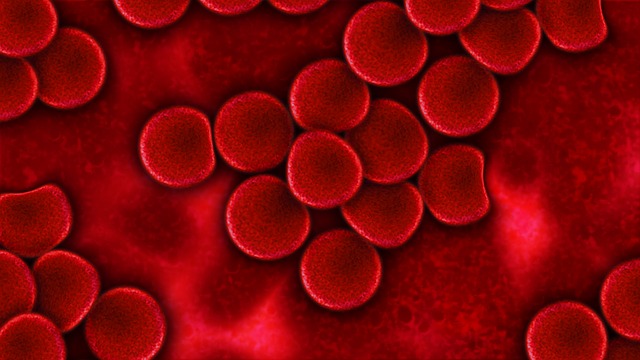 Red Blood Cells - Bone marrow makes 2.5 million red blood
cells per second.
Red Blood Cells - Bone marrow makes 2.5 million red blood
cells per second.
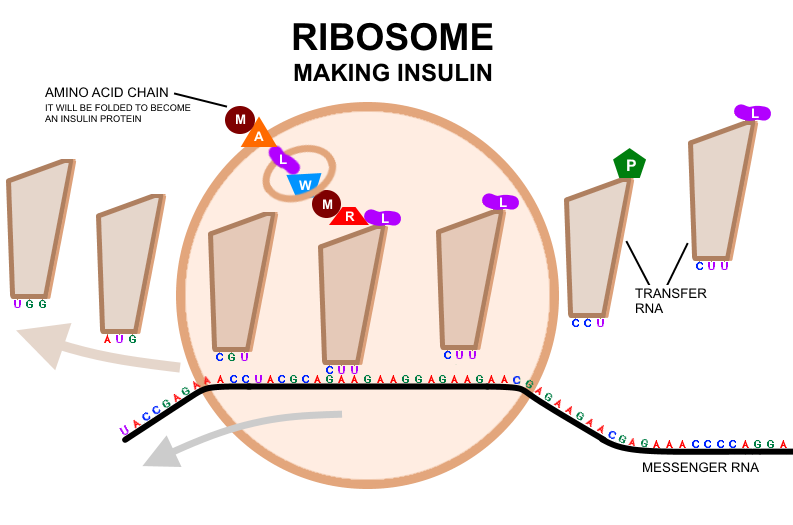 Ribosomes - This machine, which is itself made up
of 52 proteins, translates Messenger RNA and manufactures an amino acid chain
which becomes a protein. There can be as many as 10 million of these machines
in a mammalian cell. Describe the translation process and illustrate it with
pictures. How many random accidents would it take to write the code that
builds all the proteins that are in a ribosome as well as the instructions
to assemble those proteins together? Since ribosomes are the factories that build
proteins, and since ribosomes are themselves made of many kinds of proteins, how
could the first ribosome get created without a designer?
Ribosomes - This machine, which is itself made up
of 52 proteins, translates Messenger RNA and manufactures an amino acid chain
which becomes a protein. There can be as many as 10 million of these machines
in a mammalian cell. Describe the translation process and illustrate it with
pictures. How many random accidents would it take to write the code that
builds all the proteins that are in a ribosome as well as the instructions
to assemble those proteins together? Since ribosomes are the factories that build
proteins, and since ribosomes are themselves made of many kinds of proteins, how
could the first ribosome get created without a designer?
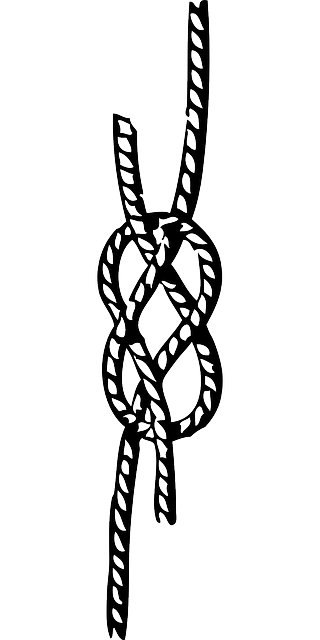 RNA Splicing - How do the machines that join
together different segments of code "know" to do that? How did the "start"
and "stop" markers get into the code without being planned by a mind? How
could the machines that read, copy, and splice the code together arise
without being designed?
RNA Splicing - How do the machines that join
together different segments of code "know" to do that? How did the "start"
and "stop" markers get into the code without being planned by a mind? How
could the machines that read, copy, and splice the code together arise
without being designed? RNA World - Since DNA is so complex, requires
so many machines to manufacture, and requires so much pre-existing information
to produce, and since RNA has some attributes of both DNA and proteins, many
scientists have hypothesized that life began with RNA. However, RNA is more
unstable than DNA. No one knows where the machinery to produce RNA or the
information it needed to contain would come from. The Final Report issued
after the "Astrobiology Workshop" at the Ames Research Center, California
in September of 1996 says, "It has been postulated that there was a time in
protobiological evolution when RNA played a dual role as both genetic
material and a catalytic molecule ('the RNA world'). However, this appealing
concept encounters significant difficulties. RNA is chemically fragile and
difficult to synthesize abiotically. The known range of its catalytic
activities is rather narrow, and the origins of an RNA synthetic apparatus
is unclear."
RNA World - Since DNA is so complex, requires
so many machines to manufacture, and requires so much pre-existing information
to produce, and since RNA has some attributes of both DNA and proteins, many
scientists have hypothesized that life began with RNA. However, RNA is more
unstable than DNA. No one knows where the machinery to produce RNA or the
information it needed to contain would come from. The Final Report issued
after the "Astrobiology Workshop" at the Ames Research Center, California
in September of 1996 says, "It has been postulated that there was a time in
protobiological evolution when RNA played a dual role as both genetic
material and a catalytic molecule ('the RNA world'). However, this appealing
concept encounters significant difficulties. RNA is chemically fragile and
difficult to synthesize abiotically. The known range of its catalytic
activities is rather narrow, and the origins of an RNA synthetic apparatus
is unclear."
 Signal Transduction (Cell Signaling)
- This can be a complex and difficult topic. It involves . . .
Signal Transduction (Cell Signaling)
- This can be a complex and difficult topic. It involves . . .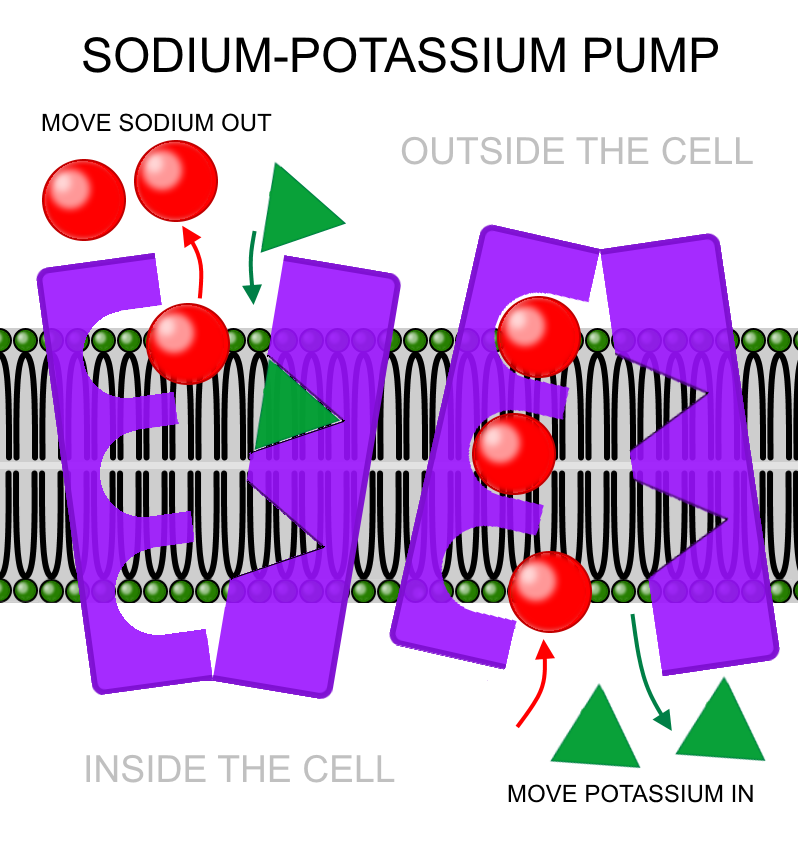 Sodium-Potassium Pump - Describe and illustrate
its structure. Describe how it forces sodium molecules outside the membrane
and forces potassium inside the membrane - both into areas of higher
concentration. It can pump 65 times per second. There can be 1000 of
these pumps in a square micron of membrane surface. How many of these
pumps does the human body have? How could such a pump that has the
appearance of being designed for a purpose have been generated randomly?
Sodium-Potassium Pump - Describe and illustrate
its structure. Describe how it forces sodium molecules outside the membrane
and forces potassium inside the membrane - both into areas of higher
concentration. It can pump 65 times per second. There can be 1000 of
these pumps in a square micron of membrane surface. How many of these
pumps does the human body have? How could such a pump that has the
appearance of being designed for a purpose have been generated randomly?
 Speed of Your Mind - When you talk to a
friend, the words flow out easily. They come from your mind. In one
short minute you may say 100 words. How long would it take a computer
to generate the same words by randomly selecting letters? It would
likely never do so in all the time that ever existed. Compared to random
processes, our minds are much faster at creating new informational content.
Minds can produce novels, poems, computer programs, musical scores,
blueprints, and web pages in a short amount of time. Random processes
would likely never produce these things. There is a big speed difference
between a mind and random processes. There are things a mind can do in a
matter of seconds or minutes that random processes could not do in 20
billion years. It is more reasonable to think that a mind could produce
the code of life in a short time than to think random processes could do
so ever.
Speed of Your Mind - When you talk to a
friend, the words flow out easily. They come from your mind. In one
short minute you may say 100 words. How long would it take a computer
to generate the same words by randomly selecting letters? It would
likely never do so in all the time that ever existed. Compared to random
processes, our minds are much faster at creating new informational content.
Minds can produce novels, poems, computer programs, musical scores,
blueprints, and web pages in a short amount of time. Random processes
would likely never produce these things. There is a big speed difference
between a mind and random processes. There are things a mind can do in a
matter of seconds or minutes that random processes could not do in 20
billion years. It is more reasonable to think that a mind could produce
the code of life in a short time than to think random processes could do
so ever.
 Thermodynamics - An Open System is one in
which energy is being added. Planet Earth is an Open System because the sun
is constantly adding heat. The Second Law of Thermodynamics requires that, over
time, there will be an increase in entropy (disorganization). Many evolutionists
say that the Second Law of Thermodynamics does not apply in an Open System. But
stacks of lumber, bricks, glass, wire, dry wall, pipes, and other supplies submitted
to the influences of sunshine, blowing winds, and flowing water will not assemble
themselves into a house - no matter how much time passes. What is needed is not just
energy, but DIRECTED energy, such as the intelligently directed energy supplied by a
construction crew. In an Open System, without intelligence or intelligent design,
new complex things do not get created or invented, and existing complex things
deteriorate. The Second Law of Thermodynamics is active in an Open System.
Thermodynamics - An Open System is one in
which energy is being added. Planet Earth is an Open System because the sun
is constantly adding heat. The Second Law of Thermodynamics requires that, over
time, there will be an increase in entropy (disorganization). Many evolutionists
say that the Second Law of Thermodynamics does not apply in an Open System. But
stacks of lumber, bricks, glass, wire, dry wall, pipes, and other supplies submitted
to the influences of sunshine, blowing winds, and flowing water will not assemble
themselves into a house - no matter how much time passes. What is needed is not just
energy, but DIRECTED energy, such as the intelligently directed energy supplied by a
construction crew. In an Open System, without intelligence or intelligent design,
new complex things do not get created or invented, and existing complex things
deteriorate. The Second Law of Thermodynamics is active in an Open System.
 Topoisomerase - DNA sometimes gets tangled like
a telephone cord. An amazing molecular machine called topoisomerase snips the
DNA molecule in two, untangles it, and mends it back together again. This looks
like the product of a mind capable of perception, foresight, ingenuity, and
planning. How could any evolutionary pathway design such an intricate machine?
Topoisomerase - DNA sometimes gets tangled like
a telephone cord. An amazing molecular machine called topoisomerase snips the
DNA molecule in two, untangles it, and mends it back together again. This looks
like the product of a mind capable of perception, foresight, ingenuity, and
planning. How could any evolutionary pathway design such an intricate machine?
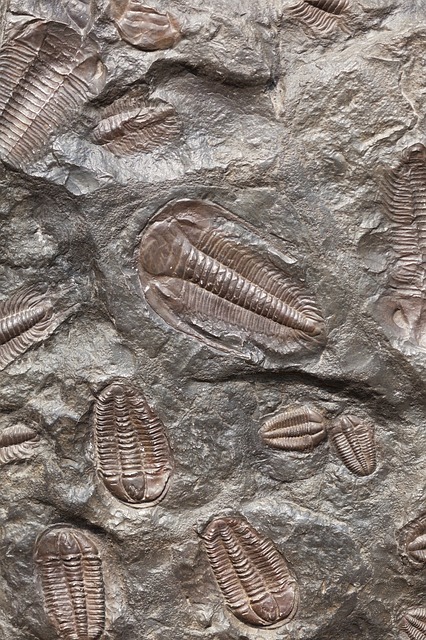 Trilobite Eye - Describe and illustrate this
advanced eye - a marvel among marvels. It is found at the base of Cambrian
strata! There is a lot to research and report on with this topic.
"...trilobites may have been superior to current living animals. They had,
in principle, perfect vision: They possessed the most sophisticated eye
lenses ever produced by nature. ... [they] look like they were designed by a
physicist." - Science News vol. 105, 2/2, 1974.
Trilobite Eye - Describe and illustrate this
advanced eye - a marvel among marvels. It is found at the base of Cambrian
strata! There is a lot to research and report on with this topic.
"...trilobites may have been superior to current living animals. They had,
in principle, perfect vision: They possessed the most sophisticated eye
lenses ever produced by nature. ... [they] look like they were designed by a
physicist." - Science News vol. 105, 2/2, 1974. Unique Genes - How many genes are unique to
humans? You will need to research to find this. One source said, “It was
conservatively estimated that the human genome encodes more than 300
human-specific genes...." - Yong E. Zhang and Manyuan Long, "New genes
contribute to genetic and phenotypic novelties in human evolution",
(http://www.sciencedirect.com/science/article/pii/S0959437X1400094X)
What is the mathematical probability of a new gene generating in 7 million
years? How about hundreds of new genes?
Unique Genes - How many genes are unique to
humans? You will need to research to find this. One source said, “It was
conservatively estimated that the human genome encodes more than 300
human-specific genes...." - Yong E. Zhang and Manyuan Long, "New genes
contribute to genetic and phenotypic novelties in human evolution",
(http://www.sciencedirect.com/science/article/pii/S0959437X1400094X)
What is the mathematical probability of a new gene generating in 7 million
years? How about hundreds of new genes?
 Variation within a Species - Variations
within a species are readily observable. These variations are programmed
for in the genetic code. This is what Charles Darwin observed on the
Galapagos Islands. Finch beaks get longer. (They get shorter too.) Was
it reasonable for Darwin to extrapolate from this observation that land
mammals evolved into whales?
Variation within a Species - Variations
within a species are readily observable. These variations are programmed
for in the genetic code. This is what Charles Darwin observed on the
Galapagos Islands. Finch beaks get longer. (They get shorter too.) Was
it reasonable for Darwin to extrapolate from this observation that land
mammals evolved into whales?
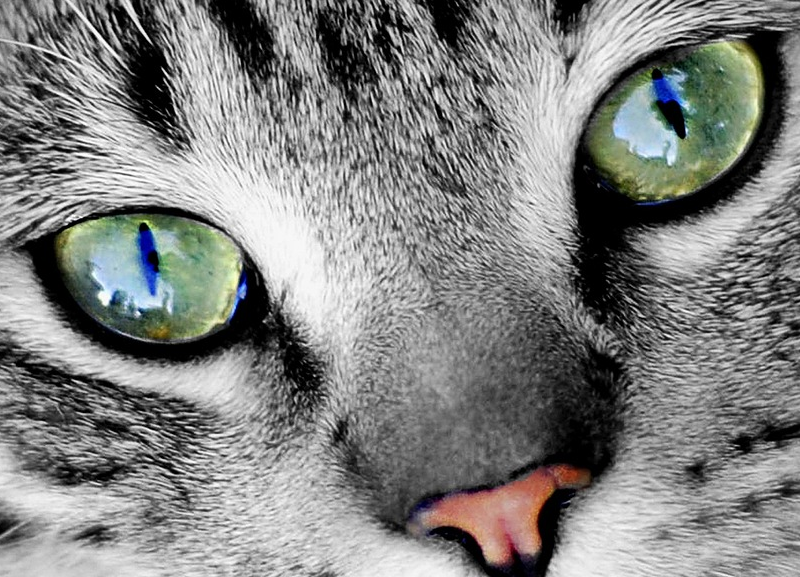 Vertebrate Eye - How could an
invertebrate eye evolve into a vertebrate eye? This was the question
being debated by college students when Sylvia Baker asked, "If we cannot
agree HOW it happened, perhaps we should consider WHETHER it happened."
Vertebrate Eye - How could an
invertebrate eye evolve into a vertebrate eye? This was the question
being debated by college students when Sylvia Baker asked, "If we cannot
agree HOW it happened, perhaps we should consider WHETHER it happened."
 Whale Evolution - Whales were supposed
to evolve from land mammals in less than 50 million years, not enough
time for a few small changes. Dr. David Berinski estimates there are
50,000 differences between whales and land mammals. Richard Sternberg
asks how could hundreds or thousands of adaptive changes occur in
whales in such a short time?
Whale Evolution - Whales were supposed
to evolve from land mammals in less than 50 million years, not enough
time for a few small changes. Dr. David Berinski estimates there are
50,000 differences between whales and land mammals. Richard Sternberg
asks how could hundreds or thousands of adaptive changes occur in
whales in such a short time?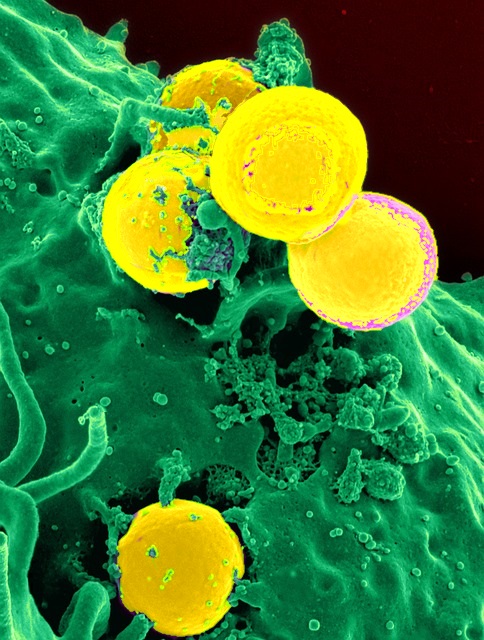 White Blood Cells - Once a cell is infected
with a virus, it releases signals outside the cell like a warning system.
White blood cells are designed with the amazing capacity to manufacture antibodies
that destroy viruses they had never encountered before. Then they “remember” the
viruses and how to make the antibodies if they enter the body again.
White Blood Cells - Once a cell is infected
with a virus, it releases signals outside the cell like a warning system.
White blood cells are designed with the amazing capacity to manufacture antibodies
that destroy viruses they had never encountered before. Then they “remember” the
viruses and how to make the antibodies if they enter the body again.